This chapter really made sense- someone needs to claim their writing. Why else write? What good is it to become completely disassociated with your writing? One who does that is a prostitute, pandering to their audience and killing their self. It's always nice to get compliments about something you create, and I think, at least on the inside, all of us dream about making something that will exist long after we are gone, but acceptance and adulation shouldn't be the sole reasons one is driven to write. Without getting to Fruedian I look at writing as a release of tension. Life is full of stressors and difficult situations and I guess it's important to find a way to deal with them. Some people drink, some people write. I guess I'm just one of those people who does both.
I also liked the chapter Trust Yourself. It's about....well... it's pretty self-explanatory. I was reading an article in Psychology the other day that said confidence is the most attractive personality trait that people look for in a mate, and I think it holds true as the most attractive attribute people look for in an author as well. Goldberg writes about being comfortable with what you write- I totally agree with that, it's like she read my mind when she wrote the book! Seriously though, if you aren't totally completely positively comfortable with expressing your innermost feelings then you won't be able to hone them into some sort of respectable craft. And no one likes to read something that's half-assed, especially if it's because the author is worried about being judged or some shit.
On a side note I've always found it funny that people read books about writing. It seems to be that if you want to be a better writer you'd read good books, not books about good books. Maybe that's counter-intuitive, but I feel like there is more I can learn from reading "For Whom The Bell Tolls" than someone telling me I need to trust myself. I like the information and I'm not saying it isn't good, but as a side-note, I would rather read something that has implicit value.
Thursday, April 7, 2011

Thursday, March 24, 2011
Essays
Voltaire coined the term "essay", it comes from the latin word "essai" meaning "a path". That's how I imagine essays being, a sort of winding path that takes you from point A to point B and all along the while you're allowed to admire the scenery. The poorer examples have a very vapid surrounding, but essays I like are the ones that manage to spruce up what you see about you. Personally, I'm not a fan of pretension or Pedants so I really didn't like a lot of these essays, they seemed like they were an attempt to write an essay rather than to tell a story, to take the reader along on a trip. My favorite essay essay was "Sunday" by Henry Louis Gates, jr. I liked it because it seemed conversational and genuine. It wasn't caught up in form or anything, it could have easily been a story one hears when they are getting their haircut or waiting at a bus stop.
It read like it was being read, which is affective I think. What made it tangible was the attention to sensory details, specifically the ones about smell and taste. It might just be because I'm hungry, but when read about "fried chicken, mashed potatoes, baked corn (corn pudding)..." I was really hungry and I could imagine a quaint family dinner with a talkative family sitting down for the ritualistic Sunday Dinner. The use of vernacular speech made the already relate-able topic even more so and I'd rather read about this than hummingbirds or foxes or Cicero or whatever.
It read like it was being read, which is affective I think. What made it tangible was the attention to sensory details, specifically the ones about smell and taste. It might just be because I'm hungry, but when read about "fried chicken, mashed potatoes, baked corn (corn pudding)..." I was really hungry and I could imagine a quaint family dinner with a talkative family sitting down for the ritualistic Sunday Dinner. The use of vernacular speech made the already relate-able topic even more so and I'd rather read about this than hummingbirds or foxes or Cicero or whatever.
Thursday, March 17, 2011
I read Sprung Up In the Years Since
By Di Blasi. It's pretty graphic. There were certain times that I had to put to the book down and think about something else because I had really nasty thought- especially about maggots and dead bodies and stuff. I get what it's doing- its trying to compare American pop culture to the reality of war torn countries and how sad is it that people who able to preoccupy themselves with minutia inevitably do. She writes things like "Gnawing/Sheryl Crow is dating a new man" or writes a story about a child soldier who rapes and kills while lining the sidebars with tabloidesque blurbs about Britney Spears and Lindsay Lohan.
She writes about how people are starving how children are dying from malnourishment, and to villify the celebrity class (whom I assume she expects to be helping) she creates a juvenille "connect the pictures" with multi-thousand dollar bags and the lap dogs that match them.
This is really experimental writing and I kind of like it, I understand why it is how it is, I mean no one wants to read UN reports about all this bad stuff that is happening, but by making it in a form that is fastly digestible I think it diminished her claims. She takes the absolute worst examples from both cultures and I think that, when you ignore the reality, you lose credulity. I understand that there are horrible things happening in the world, but her portrayal of celebrities and the attitude of Americans is exactly true. It is satirical, and whenever you attempt to compare satire to fact the juxtaposition is weakened.
I didn't really understand the drawing in the book, I feel like they were just doodles from the author and she wanted to add them in. I figure it might have to do with the corpearalness of humanity of something, but they aren't really good drawings so I didn't pay much attention to them. I thought her perspectives where off, which is kinda how I felt about the entire story. I really like the concrete imagery (even though it was a bit nauseating) but I wasn't all over the message. I know bad stuff is happening, but social commentary like this only effective when it legitamately understands the entire socio-culture spectrum, not just the extremes.
She writes about how people are starving how children are dying from malnourishment, and to villify the celebrity class (whom I assume she expects to be helping) she creates a juvenille "connect the pictures" with multi-thousand dollar bags and the lap dogs that match them.
This is really experimental writing and I kind of like it, I understand why it is how it is, I mean no one wants to read UN reports about all this bad stuff that is happening, but by making it in a form that is fastly digestible I think it diminished her claims. She takes the absolute worst examples from both cultures and I think that, when you ignore the reality, you lose credulity. I understand that there are horrible things happening in the world, but her portrayal of celebrities and the attitude of Americans is exactly true. It is satirical, and whenever you attempt to compare satire to fact the juxtaposition is weakened.
I didn't really understand the drawing in the book, I feel like they were just doodles from the author and she wanted to add them in. I figure it might have to do with the corpearalness of humanity of something, but they aren't really good drawings so I didn't pay much attention to them. I thought her perspectives where off, which is kinda how I felt about the entire story. I really like the concrete imagery (even though it was a bit nauseating) but I wasn't all over the message. I know bad stuff is happening, but social commentary like this only effective when it legitamately understands the entire socio-culture spectrum, not just the extremes.
Thursday, March 10, 2011
“New York/ LA whirlwind Romance”
I’d like ot talk about the Short Story “New York/ LA whirlwind Romance”. I liked it because it seemed real- for anyone who has been in a long distance relationship, or more easily admitted, had “friends” in a long distance relationship these things that have been written are relatable. I saw that this piece started off as an excerise where the heard lines from passing conversations and wrote them down and I like that- it speaks to how similar everyone really is. It was almost written as if to show the stereotypical relationship. While I read it it seemed genuine to me, but looking back and taking the sentences a part one by one it seems almost comical. While the lines could be taken seriously, I could also see this as a humorous parody of what a the author deems to be the “average” long distance relationship. The line “Look, I’ll say it, I love you” really exemplified that- in the context of the character I believed that he would say it, but outside the story it seems kind of funny to me- like the kind of thing that is so cliché no one would actually say it. Overall, I liked this story, I was surprised, but I liked it. I was going into this reading under the assumption that it would be preachy and polemic but it seemed like an entertaining short story to me.
Friday, February 25, 2011
Kind of tired of doing movie titles for blog posts so I'm not going to OR Spring Break is only hours away.
The Burrway writing was basically repeating everything the most remedial advice about writing. It was the "show vs. tell" and "use the active voice" spiel. Not that it's not helpful, but at a certain point reading about how to do something so many times can lose it's affect, and implementation of the attempted stylistic preferences is the only way to get better at it.
I did like the anecdotes in it though, often academic writing can become monotonous but the eclectic snippets of various stories kept the reading lite. It is also helpful to see examples of the correct (and incorrect) ways to write. I also like how the PDF was scanned as a landscape, it made reading it on my computer much easier. When it is vertically uploaded I have to wrench my head to the side and I look like a mis-guided flamingo; one who through his unrepentant environmentalism decides to sacrifice the well-being of his neck in order to save if only one tiny tree.
Edit: Upon a brief examination of my computers PDF reading program I have found that there is an option to rotate the said PDF. It looks as if my upper-spinal damage was in vain.
Goldberg writes about the dissolving dichotomy between the ordinary and extraordinary; about how the definition is reliant upon so much more than the content-- instead finding worth in the circumstance, environment, characters, even the reader.
I agree with this and find it interesting, the concept of absolutes seems very silly to me, so to pin a passage or an event as positively ordinary, or conversely, extremely extraordinary is ill-advised to any writer. In fact, when trying to describe an occurrence the added distance between how it is normally perceived and how it is perceived in the writing can add extra poignancy and weight.
The story I read was Internal. I thought it was very smart- it took me a while but when I recalled my basic knowledge of psychology I realized that this was a dark satire of clinical and behavioral psychology.
Rauch and his intern represent the clinical aspects- this is shown by the ridiculous percentiles and avoidance of patients. Kagen, however, is a behaviorist-- a philosophy shown by the unusual detachment from possible emotional bias of any action. The form of the story, that of a scientific report, adds to the satirical nature by emulating what it is mocking.
I also liked that the story ended in futility with both interns "running out of ink" because it speaks towards the intellectual waste that occurs when a certain dogmatic way of thinking takes over one's life and common sense is disregarded. When one ignores logic and sanity, as the interns did by willingly imprisoning themselves, no progress can be made.
----------------------------------------------------------------
I did like the anecdotes in it though, often academic writing can become monotonous but the eclectic snippets of various stories kept the reading lite. It is also helpful to see examples of the correct (and incorrect) ways to write. I also like how the PDF was scanned as a landscape, it made reading it on my computer much easier. When it is vertically uploaded I have to wrench my head to the side and I look like a mis-guided flamingo; one who through his unrepentant environmentalism decides to sacrifice the well-being of his neck in order to save if only one tiny tree.
Edit: Upon a brief examination of my computers PDF reading program I have found that there is an option to rotate the said PDF. It looks as if my upper-spinal damage was in vain.
Goldberg writes about the dissolving dichotomy between the ordinary and extraordinary; about how the definition is reliant upon so much more than the content-- instead finding worth in the circumstance, environment, characters, even the reader.
I agree with this and find it interesting, the concept of absolutes seems very silly to me, so to pin a passage or an event as positively ordinary, or conversely, extremely extraordinary is ill-advised to any writer. In fact, when trying to describe an occurrence the added distance between how it is normally perceived and how it is perceived in the writing can add extra poignancy and weight.
The story I read was Internal. I thought it was very smart- it took me a while but when I recalled my basic knowledge of psychology I realized that this was a dark satire of clinical and behavioral psychology.
Rauch and his intern represent the clinical aspects- this is shown by the ridiculous percentiles and avoidance of patients. Kagen, however, is a behaviorist-- a philosophy shown by the unusual detachment from possible emotional bias of any action. The form of the story, that of a scientific report, adds to the satirical nature by emulating what it is mocking.
I also liked that the story ended in futility with both interns "running out of ink" because it speaks towards the intellectual waste that occurs when a certain dogmatic way of thinking takes over one's life and common sense is disregarded. When one ignores logic and sanity, as the interns did by willingly imprisoning themselves, no progress can be made.
----------------------------------------------------------------
My walls are pretty bland. I’ve never been to prison, but I joke to my friends that my room looks like one— it’s manilla/beige concrete bricks and tan carpet and some fleshy curtains that look like shanks of human skin. For obvious reasons I’m not there much. I was out a flea market (because, as a 22 year old white male, I am truly at home in the flea market setting) the other day and it was a real bummer- no good deals, nothing. Usually I can find an old knife or there is a Mexican guy selling quarter tacos out the back of his pick-up but today nothing. There was a pierogi vendor but he wasn’t even polish and he was selling them out of a hand cart so why bother? I’m totally fine with producers cutting costs by using questionable means of sanitation. So I’m walking around looking for anything to salvage my Wednesday afternoon when I see this real weird booth in the corner. Most of the warehouse that the flea market was in had cheap tile flooring, but this stand was over behind some heavy machinery where the ground has turned to dirt. I walk back there and I don’t see any body at this really sketchy old booth, it was covered in maroon scarves and had poorly carved walking sticks that still had sap and bark on them and I’m make a movement towards a tub of used cutlery (sometimes renegade silver forks can go for a killing on eBay) when an old woman popped up. I had no idea where she came from, she was small, like a child with really bad scoliosis or something, so maybe she was underneath the table, but I don’t know. She had a dirty green shawl that looked like it was brown until I really looked at it and fingernails that looked like tiny carotene shovels jutting out from each digit. She was the closest thing to a gypsy metro-Detroit had to offer. And she goes “what do you want”; Typical gypsy customer service.
I said, “you know, I’m just kinda looking around” and she says “well don’t waste my time, I’m on a busy schedule”.
“yeah, I can tell” I said looking around at all the people who weren’t there.
I’m looking around and I don’t see much (the used cutlery bin was a bust) except for this bright blue corner of a picture that was covered by a rag. Most of it was hidden beneath the fabric, but I saw this really bright blue color like the sky after it’s been cloudy for a few days and you’ve almost forgot what sunshine looks like.
“what’s the painting over there” I said to her and she goes “it’s not for sale”.
I’ve dealt with flea-market folk before, and I know everything is for sale. I bought my friend a date with a guys daughter once. This is just a trick they use to run the price up.
“I know it’s for sale, you brought it here, you didn’t bring it to not sell it” and she looks at me with little black marbles she has instead of eyes and said “you don’t want this painting. It’s for sale, but not to you”.
“just let me see it” I said. She could tell I wasn’t going to leave so she turned around and limped over to the painting, pulled of it’s cover, and showed it to me. It was one of those cookie cutter pictures of Jesus Christ except that it seemed so vibrant. I remember looking at those when I was like 6 years old and sitting in church praying that it would end. It was the kind of painting that was hung right behind the pastor, an overbearing presence on the crowd below. The one where he looks like he is judging you, but accepting, but then judging again. I don’t know, it’s a real strange thing. It was like one of those but really bright, the blue seemed to pop off the page. It was the perfect thing to bring some life to my room. Resurrect it.
I said to her “I’ll pay you 10 bucks for that painting” and she says “no, its not for sale, you don’t understand what this is” and I’m thinking “yeah right, it’s a painting of Jesus Christ, I know what it is” and so I say again, okay, how much do you want for it. She looks at me for like 9 seconds which doesn’t seem like that long, but if you’ve ever really had someone stare at you without talking for anything longer than 3 seconds you know how it feels. I got kind of cold and then could feel sweat starting too form above my eyebrow and she goes “you really want this painting? Fine having” and threw it at me. “But don’t try and bring it back, I don’t want it anymore.”
It was kinda strange, I had never gotten anything for free like that before, but I had my painting and I was pretty happy about that so I didn’t think much of it.
It was late when I got home so I hung the painting up above the threshold to the door of my room so I could see it when I was in bed. It was eerie; it reminded me of when I was in church. But it was bright and it cleaned up the room so I didn’t mind. The room needed some color after all, it was so drab. I hung it up, went down the bar to meet some friends, had a few drinks, got a little drunk, had a few more drinks, got pretty drunk, asked a girl for her number, got rejected, called her a bitch, got slapped, talked to my friend about how dumb girls where, then stumbled back to my room. I fell into bed and was about to go to fall into a horribly inefficient drunken slumber when I saw it. It was Jesus, framed with an exploding blue sky staring at me—The Son of God staring me down in my own room. And then he began to speak.
“Blake” he said. I was really surprised how Jesus sounded, I imagined him having a booming voice or maybe even sounding like Morgan Freeman. He didn’t sound like that, but he also didn’t sound like a regular guy. He had a very particular way of enunciating every letter in a word and finishing especially hard on the last audible consonant. “You’ve made some pretty bad decisions”. Still feeling painful slap of rejection I thought to myself that I imagined God being a bit more profound. “And now you need to repent”
“Oh my God” I said
“Yes, my son, I am here” he said. I’ve got really poor night vision so I couldn’t tell if the actual painting’s lips where moving when he talked, but the inflection he used when he said what he said made it seem like he was poking fun at my choice of words, but without confirmation from his mouth I can’t be sure.
Thursday, February 10, 2011
PYRAMID HEAD
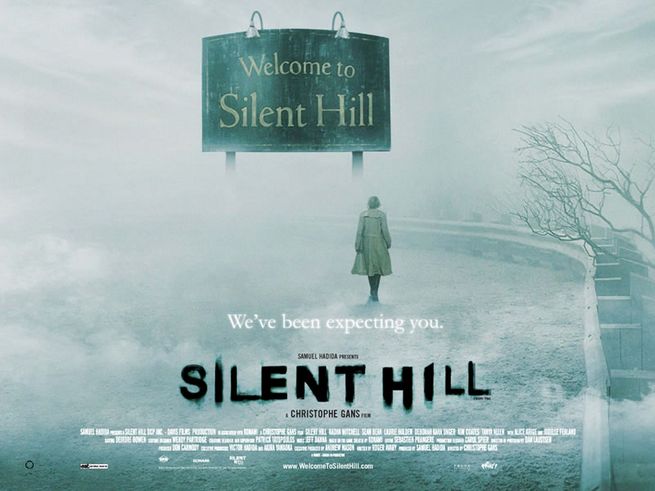
I kind of liked these micro short stories- they were liked personal pan pizzas or bite size candy bars. Just enough to temporarily satiate ones literary desires, but not enough to cause intellectual bloating.
My favorite short story was "The List of Famous Hats". It reminded me of something that was written in the margin of some student's history notes. It was very laid-back and conversational and ended abruptly with the kind of ending that makes it seem like he just got bored of writing and wanted to end it as soon as possible. I liked it though probably because it was only a paragraph long and I didn't have time to dislike it, but I liked it none the less. I imagined Napoleon rubbing vaseline all over his head (which I'm almost sure is an anachronism as I don't know is Vaseline was yet trademarked in Napeloenic France). The thought of the little man I've seen imitated and sensationalized in modern media doing such a silly thing seemed funny to me. I know that this doesn't seem to do much with Silent Hill, but if you've played the video game that the movie is based on you would know that there are ghastly creatures called "Pyramid Heads" that swing giant blades and try to kill you. Which is exactly what I thought of when the author ends his piece so eloquently.
Thursday, February 3, 2011
I call it a Kaiser Blade


The first poem I'm going to review is 11 A.M. Wednesday, August 24, 2005.
I assume it's called this because that's when the author first heard the news that a certain unnamed tropical depression had been upgraded to Hurricane Katrina. It's a pretty simple poem with dramatic spacing that is used to heighten the feeling of impending doom. What I really liked what when she revered to the name of the storm as a weapon calling it a "crisp, bladed noun". I think that it gives the hurricane sinister qualities without trying to overload if with negative adjectives. It is simple and succinct- qualities that hold stark contrast against the actual hurricane. When I read that I immediately thought of the short film "Some Folks Call it a Sling Blade" not because of the content of the short film or the poem, but because a blade is such a memorable item. To me, the word "blade" has some very gruesome connotations, especially in when the context isn't associated to hockey or Thanksgiving dinner, and this poem capitalized on that making the name of the hurricane seem like a dangerous object that can do great harm.
The second poem I am reviewing is 7 P.M. Thursday August 25th, 2005. It is a short poem that has a kind of strange structure. It is written in two columns and looks like a pair of pillars on the page. I think it is from the view of the Hurricane and it talks about what the hurricane sees and feels and desires and ends with Smith writing (from the perspective of the hurricane) "and want it / all". I think that this is the view of the Hurricane by her and the people whom it affected - them believing that the hurricane was a sentient force that was demoniacally ruining their lives and enjoying it, an entity with an insatiable urge for destruction. I don't really agree with that because, while I understand this is writing and the author takes liberties to explain the feelings of the people, it was just a hurricane and it did not intentionally destroy homes. To feel that a weather system could gain satisfaction from any action is ludicrous and it takes away from the personal responsibility of those harmed by the hurricane. If the hurricane has thoughts and desires, then the people affected by it can claim they were helpless to higher forces and while the poetic language may be used effectively to prove a point, I completely disagree with that point.
Subscribe to:
Posts (Atom)