Thursday, January 27, 2011

A Clockwork Orange


Unlike most public officials and media personalities would like you to believe, there is definite value in violence- in the unpleasant and even repulsive. I really loved TELL ME WHAT YOU KNOW ABOUT DISMEMBERMENT for that very reason. While it was not sweet nor soft I appreciate the realism of it. Ultra-violence is a part of the human sole, and while often it is subdued and only comes out in the most socially inept and psychotic there are animalistic urges in every human being that are buried deep beneath centuries of acculturation, socialization, evolution, and ethical morality. It is important that we recognize this as humans, because with recognition it can be controlled, virtually stopped.

Because it is so unusual it is poignant, corporeal language that creates a vivid image in the mind of the reader. This poem is not defined by its rhyme structure, but rather by its content, which is how any type of art should be reviewed. While the purpose of A Clockwork Orange and TELL ME WHAT YOU KNOW ABOUT DISMEMBERMENT have different purposes, the delivery remains the same, and that while the meaning is powerful, the ability for it to be quickly and completely be transferred from the medium to the mind is what accentuates the purpose. This is how poetry should be- raw and vigorous. The fasted way to reach point A from point B is a straight line. Do not waste time with schemes, use every word to it's fullest potential.

The Minus Man


I hate to be a downer, but I really don't like Sonnets. I think the entire thing is really contrived, it's like driving with a flat tire to make a point. I think that the purpose of writing is to convey thoughts and emotions and that is best done without the constraints of length or rhyme structure which is really why I dislike these Sonnets, especially the Shakespearean ones. I think that Sonnets have their purpose as a writing exercise or as a way to force one's mind to explain something in an awkward manor, but for enjoyment the only thing that grants me less is when poems are broken up into "artistic" formatting. I don't like experimental films, I don't like experimental writing.

I mean whats the point of writing about some girl you love or how nice a sunset is if you need to wrench your language around in order to accommodate a certain style you are striving for?

I was reading Sonnet 117 and asked myself that same questions. Shakespeare point is not amplified by his circumlocuitious delivery, rather it is obscured beneath rhyme structure. I think Dim Lady really exemplifies my point, because while it is probably supposed to be a satire of society, our vernacular, and the things we lift high, it really brings out how disconnected and unflattering the style is. I can't imagine how bad it would have sounded if Mullen trying to twist the words around and manipulate the language in order to make it rhyme. Good poetry shouldn't even be acknowledgeable as poetry to the casual listener.

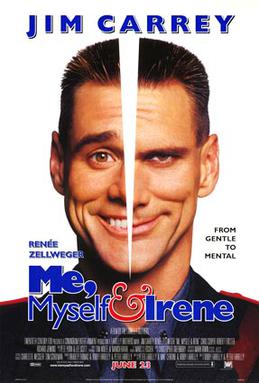
Me, Myself, and Irene.


I think I'm going to start every blog post with the title of a movie that is either similar to what I would write, or has some connection to the content of said post. I will do this because I am a film major and I've got a thing for synergy. I am 22 years old and, since my graduation in 2007, have been enrolled in 6 different colleges. I've actually got pretty good reasons why I did this, but this isn't the time or place to go into them. I've been writing since I was in 8th grade and I wrote a short story about my science teacher. I did this because he gave me a "D-" on both my quarterly science projects and, being the ribald hack I was (read am) decided it that it was the only way I could get him back. It was 8 pages long (double-spaced for added breadth) and consisted mainly of the F-word and various scenarios where he was ingesting his own and others bodily fluids. Fecal matter, blood, the list goes on. Anyways, it's about time I review some poems, right?